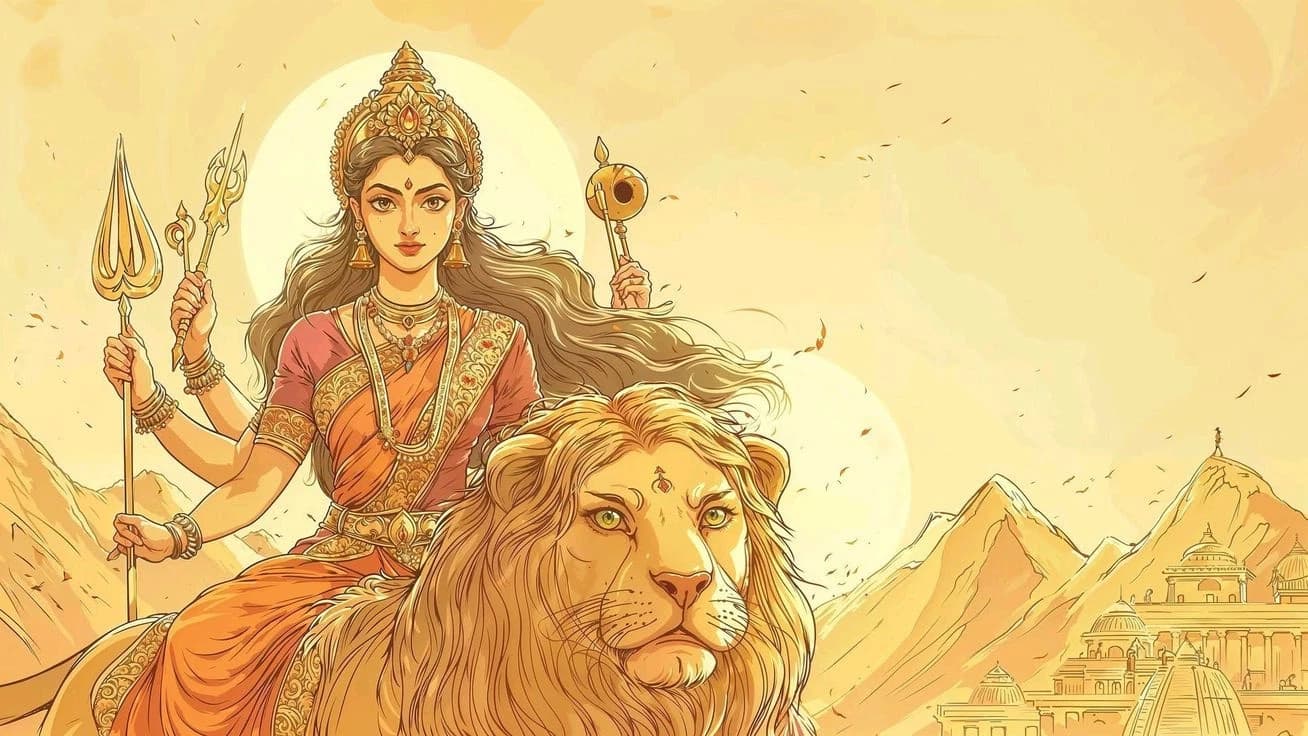
I feel connected to Maa Durga / Shakti.
Your journey with the Divine Mother देवी
The Goddess is approached as a mother — fierce in protection, tender in love. Shakta traditions see her as the Supreme Reality itself.
Preview — under editorial review. This entry was prepared with research assistance and its citations have been identified, but it has not yet been checked by a human editor. Please verify against the cited sources before relying on it.
Step 1
Who is Devi?
Devi appears as Durga the protector, Kali beyond time, Lakshmi of abundance, Saraswati of wisdom, Parvati the consort of Shiva, and Lalita Tripurasundari of supreme beauty — many forms of one Shakti.
Step 2
What do the scriptures say?
- Rigveda 10.125 (Devi Sukta) — Vak declares: “I move with the Rudras and the Vasus… I am the queen.”
- Kena Upanishad (section 3–4) — Uma Haimavati appears and teaches the gods about Brahman.
- Devi Mahatmya (Markandeya Purana) — the Goddess as supreme protector.
- Devi Bhagavata Purana, including the Devi Gita (Book 7).
- Lalita Sahasranama (Brahmanda Purana).
Step 3
Philosophical significance
Shakti means power. In Shakta thought, the Goddess is the dynamic Supreme — consciousness and energy together. Shaiva traditions see Shakti as inseparable from Shiva: “Shiva united with Shakti is able to create” (Saundarya Lahari 1).
Step 4
A note on practice
Hymns such as Ya Devi Sarvabhuteshu are recited freely. Bija mantras (like the Navarna mantra) and Sri Vidya practices are traditionally received through initiation from a qualified teacher.
How a beginner can start
- 1
Read the Devi Mahatmya in translation during Navaratri.
- 2
Learn the Ya Devi Sarvabhuteshu hymn and its meaning.
- 3
Read the Kena Upanishad’s story of Uma Haimavati.
Related mantras, stories and scriptures
Mantras and their meanings
या देवी सर्वभूतेषु शक्तिरूपेण संस्थिता।
Ya Devi Sarvabhuteshu (Durga Saptashati)
To the Goddess who abides in all beings as power — salutations to her, salutations to her, salutations again and again.
ॐ ऐं ह्रीं क्लीं चामुण्डायै विच्चे
Navarna Mantra (Om Aim Hreem Kleem Chamundayai Vichche)
A salutation to the Goddess Chamunda with seed syllables. (Bija syllables are not translated literally; their meanings are explained within tradition.)
साम्ब सदाशिव साम्ब सदाशिव साम्ब सदाशिव साम्ब शिव
Samba Sadashiva
Shiva, ever-auspicious, together with the Divine Mother.
Stories from the scriptures
Durga and the Buffalo Demon
Devi Mahatmya (Markandeya Purana) Chapters 2–4
Ages 6-8How Ganesha Got His Elephant Head
Shiva Purana Rudra Samhita, Kumara Khanda (chapters to be verified)
Scriptures that discuss this
Sources & verification
Sources identified · awaiting editorial reviewCitations have been located. A human editor has not yet checked this text against the cited editions.
Rigveda — 10.125
Established referencePrimary source
Kena Upanishad — 3.12 – 4.1
Numbering varies by editionPrimary source
Interpretation note
This page describes how this form of the Divine is understood across traditions. It does not ask you to choose this path over another.
Last updated 26 November 2026 · not yet reviewed by a human editor · Our research standards
Explore another path
Understanding other traditions often deepens your own.